Eco-design, or ecodesign, is a preventive approach that involves designing a product from the design phase to minimize its environmental impact by considering its effects on the environment throughout its lifecycle, from raw material extraction to end-of-life recovery. The overall effects of eco-design can be measured by conducting a Life Cycle Analysis (LCA) using specialized software, though these are costly and still difficult to access. This LCA is repeated by considering different designs, materials, and manufacturing processes, and the best result is chosen. For example, our Wak oak bar stool : it is made with certified PEFC natural oak from sustainably managed local forests, a renewable and recyclable material. The design minimizes the amount of material used; the structure is 15mm thick, and the seat is only 5mm thick. This also reduces its weight. It is stackable, which further facilitates storage and transportation. The wood glue used is formaldehyde-free and non-toxic to humans or the environment. The natural oil finish provides durable protection and is easily repairable. The quality of the craftsmanship and materials ensures durability and reparability, extending the lifespan of this stool to minimize its environmental impact.
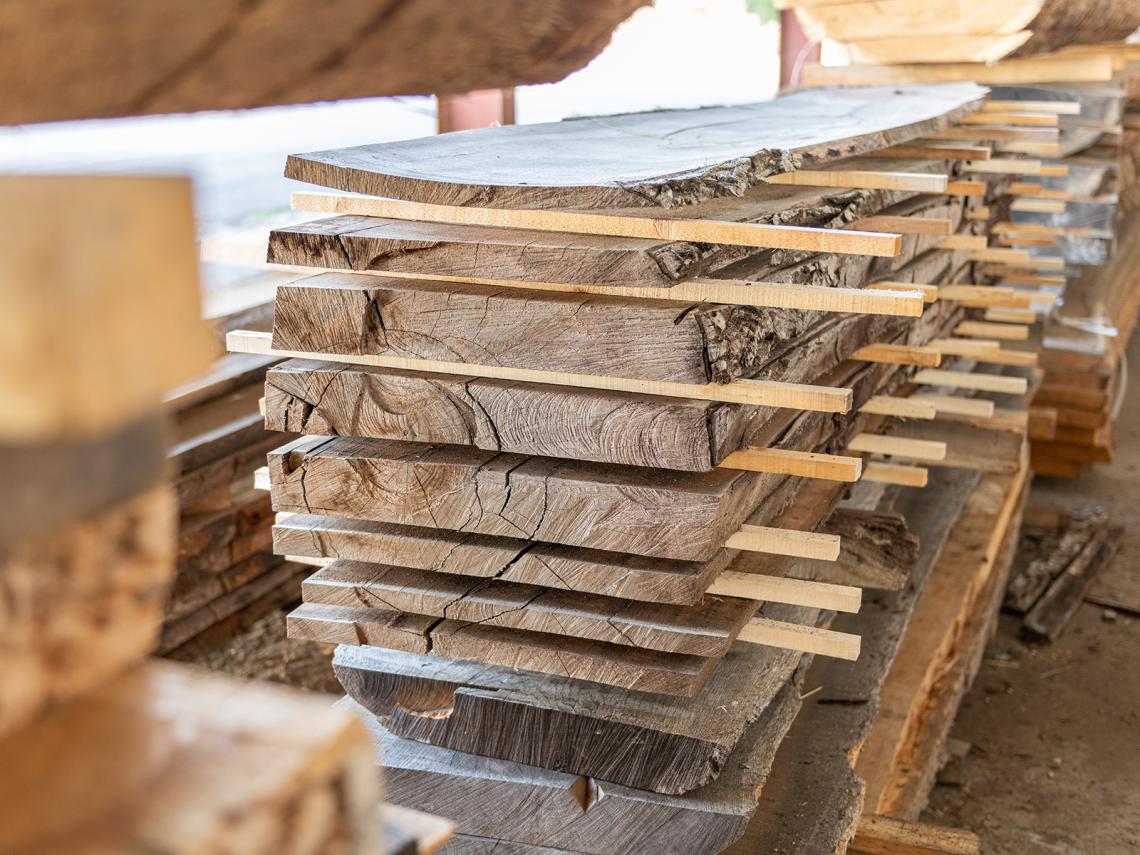
All of our furniture is eco-designed, meaning that from the design phase, everything is thought out to minimize the environmental impact of the furniture throughout its lifecycle. While we do not currently conduct LCAs, our design and manufacturing choices are made with proven expertise in ecodesign, common sense, and strong environmental concerns, so we can reasonably claim to be one of the most demanding furniture manufacturers in the world in terms of eco-design.
We design our furniture to be resource- and energy-efficient. Resource-efficient by using the least wood possible, and the thinnest possible thickness, so drying is faster and less energy-consuming. Energy-efficient by developing designs that minimize the number of processes required and favoring efficient, low-energy-consuming processes. The management of our workshops is organized to minimize impact through insulation, heating, lighting, waste management, resource optimization, and more.
Optimizing storage and transportation by reducing weight and volume helps reduce the logistics impact between the end of production and delivery to the end user, particularly the carbon footprint associated with transportation. The design and quality of our furniture make it durable, which is one of the key factors in reducing its impact. They are easy to maintain and can be restored in case of accidents, wear, or breakage. Spare parts are available indefinitely from our workshop, and any skilled artisan can repair them if needed. The natural materials used are available nearly everywhere.
Everything is designed to ensure our furniture is as durable as possible, and we can easily imagine it being in an antique store or a restorer's workshop in a few centuries, but we must acknowledge that some items may not have such a grand future, so they are designed with that in mind. The materials used are mostly natural, compostable, recyclable, or even reusable and can be repurposed at the end of their life. When multiple materials are used, they are assembled in a way that allows them to be easily disassembled with common tools for proper recycling in the best-suited channels.
We almost exclusively use natural solid wood in the manufacturing of each piece of furniture: tables, chairs, stools, and other furnishings, and the only transformation it undergoes before entering our workshop is sawing into planks at local sawmills. Unlike wood panels from industry, the solid wood we use is minimally processed and remains free of harmful chemicals commonly found in manufactured boards. Traditional carpentry joinery, all-wood, is always preferred over metal or plastic fasteners. The wood glue we use, when necessary, is guaranteed to be free of formaldehyde (a harmful substance often present in panels used in the furniture industry). The natural vegetable oils used for finishing preserve the material's natural qualities and ensure a healthy, pleasant indoor air quality.
Our region, Bourgogne Franche-Comté, is the most wooded in metropolitan France, and its forests offer remarkable diversity and quality of trees. Therefore, we naturally use this local renewable and sustainable wood resource to manufacture all our furniture. The trees we use come from natural forests, not planted by humans, and offer great diversity in tree species. Beyond the pleasure of working with wood we have seen grow in our forests and supporting the local economy, this ensures the best possible carbon footprint and minimal impact on the environment.
Our region, Bourgogne Franche-Comté, is the most wooded in metropolitan France, and its forests offer remarkable diversity and quality of trees. Therefore, we naturally use this local renewable and sustainable wood resource to manufacture all our furniture. The trees we use come from natural forests, not planted by humans, and offer great diversity in tree species. Beyond the pleasure of working with wood we have seen grow in our forests and supporting the local economy, this ensures the best possible carbon footprint and minimal impact on the environment.
License number: PEFC/10-32-2633 Chain of custody number: QUAL/12-716
The trees we select come from local natural forests, not planted by humans. These ecosystems, when properly managed, ensure the natural renewal of the resource. This is a true model of inspiration in circular economy: there are no inputs from humans, trees regenerate naturally, and the falling leaves and branches help enrich the soil. The forester, who intervenes wisely, does not need to sow, plant, prune, or carry out other artificial agricultural practices, but only to harvest this vast resource intelligently, ensuring that it has time to naturally regenerate while preserving biodiversity.
Eco-design aims to “integrate environmental aspects into the design and development of products” (IST/TR14062 standard).
Taking environmental protection into account during product design. Eco-design considers the entire product life cycle, from raw material extraction to end-of-life disposal. It also includes the consumption of materials and energy, water and air emissions, waste production, noise...
The goal of eco-design is to globally improve the ecological quality of products.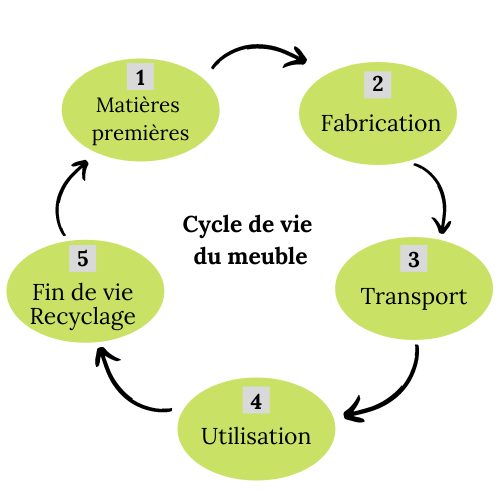
- Materials and raw materials: We only use wood from our region certified PEFC. Our tables , seats and our coffee tables are therefore made with local, sustainable wood.
- Manufacturing and Transport: During manufacturing, our carpenters work to avoid as much wood waste as possible. When waste occurs, we try to reuse it to make items such as salad utensils etc. Untreated chemically, the wood retains all its excellent properties: it breathes, absorbs moisture, and gradually releases it into the air, ensuring a healthy and pleasant surrounding climate. The wood glue used is free of formaldehyde, a harmful substance. To further its eco-design approach, Delavelle applies a natural vegetable oil during the finishing stage that emits no volatile organic compounds (VOCs) and meets the Gold label for indoor air quality and the EN 71-3 toy safety standard. Manufacturing takes place from A to Z in our workshop to minimize transportation. We are now working on developing a second building of 1,800 m² purchased in 2020 to perfect our wood stock, create a dedicated metal workshop, and set up a sawmill. The company will then become more self-sufficient, as it will fully handle wood transformation by ensuring the sawing and drying of the boards.
- Usage: By choosing solid wood, you ensure furniture with unparalleled longevity. You are making a truly qualitative investment. Your furniture may stay with you for a long time, and why not even pass down through generations. While the price may sometimes seem steep, it is important to remember that it is a long-term investment. When you choose solid wood, you are choosing durability.
- End of life / Recycling: In case of scratches on sanded wood, simply apply care oil. If the furniture is damaged, it remains easily recyclable and/or repairable, and moreover, without danger, the furniture is refined with natural vegetable oils (Meets the EN 71-3 toy safety standard for children's safety).

French wood furniture
Our region of Bourgogne Franche-Comté is the most forested in metropolitan France, and its forest offers a remarkable variety and quality of trees. It is therefore quite natural that we use this local, renewable, and sustainable resource to manufacture all our furniture. The trees we use come from natural forests, not planted by humans, and offer a great variety of tree species. Beyond the pleasure of working with wood that we have seen grow in our forests and supporting the local economy, it ensures the best carbon footprint and the least impact on our environment.


Atelier Hugo Delavelle
ZA des Champs Piot
Route de Ronchamp
70400 Saulnot
0033 (0)3 84 36 08 16
contact@delavelle-design.fr