Our approach to waste recovery is fully aligned with a broader vision of eco-design and circular economy. We are convinced that every action matters in preserving our planet, which is why we constantly strive to reduce, reuse, and recycle to the maximum when creating our solid wood furniture, contributing to a more sustainable future.
Waste recovery is a process aimed at maximizing the effective use of waste by reducing its environmental impact, while positively contributing to society and the economy. This holistic approach involves a series of practices that give waste a second life instead of treating it as mere discard. It is based on principles of reduction, reuse, recycling, energy recovery, or responsible waste treatment.
From the design phase of our furniture, we always make sure to reduce the amount of waste generated, starting with the use of local wood, which is a natural, durable, and renewable material.
However, solid wood is a living material with a lot of variability, presenting cracks, splits, and knots, meaning that not all of the material can be used. The average yield from solid wood is only 50% for furniture production! Therefore, it is crucial to optimize the use of the material through eco-design, which has been at the core of our approach since 2009.
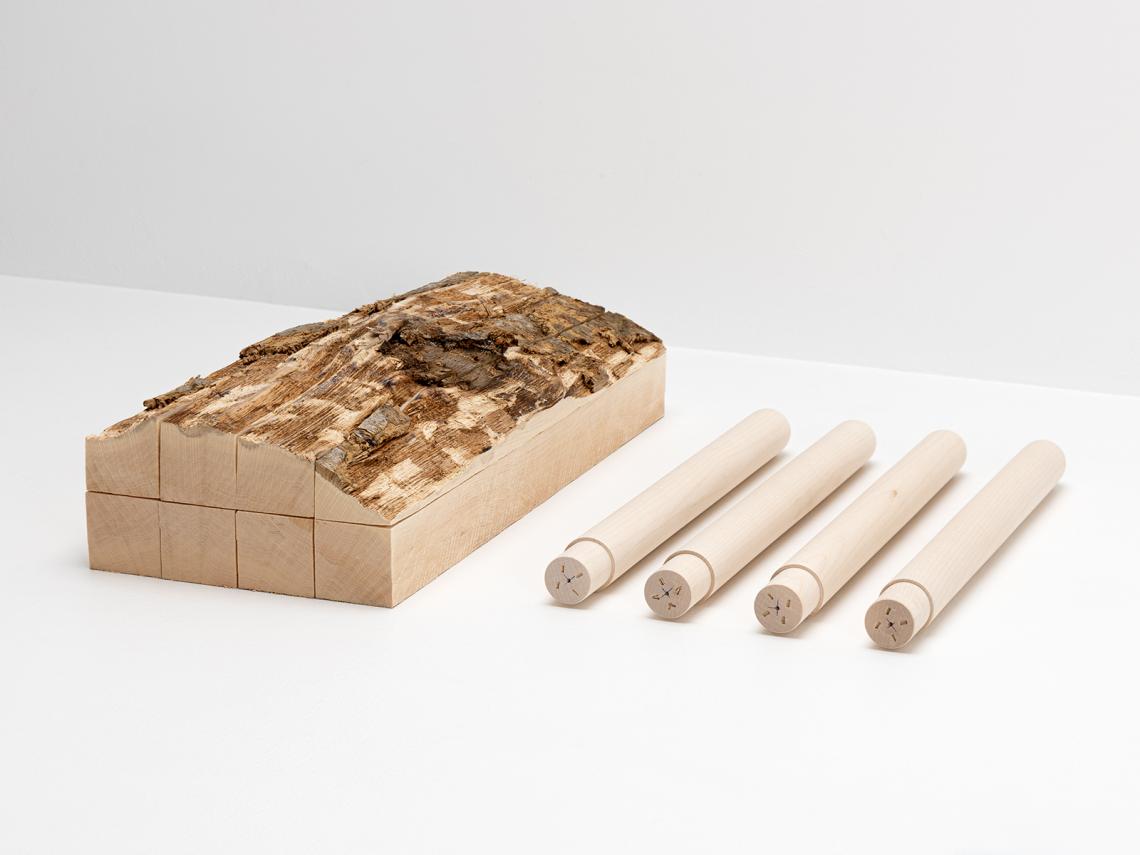
From the design phase of our furniture, we ensure to choose commonly cut sections that inevitably produce offcuts, using them to create the smaller pieces of our furniture, such as the legs of our Wak stools , which are made of two pieces of wood glued at an angle to utilize wood offcuts, or the brackets used for assembly under the seat. Thus, from the design stage, we already anticipate the reuse of wood sections commonly available among the workshop’s offcuts.
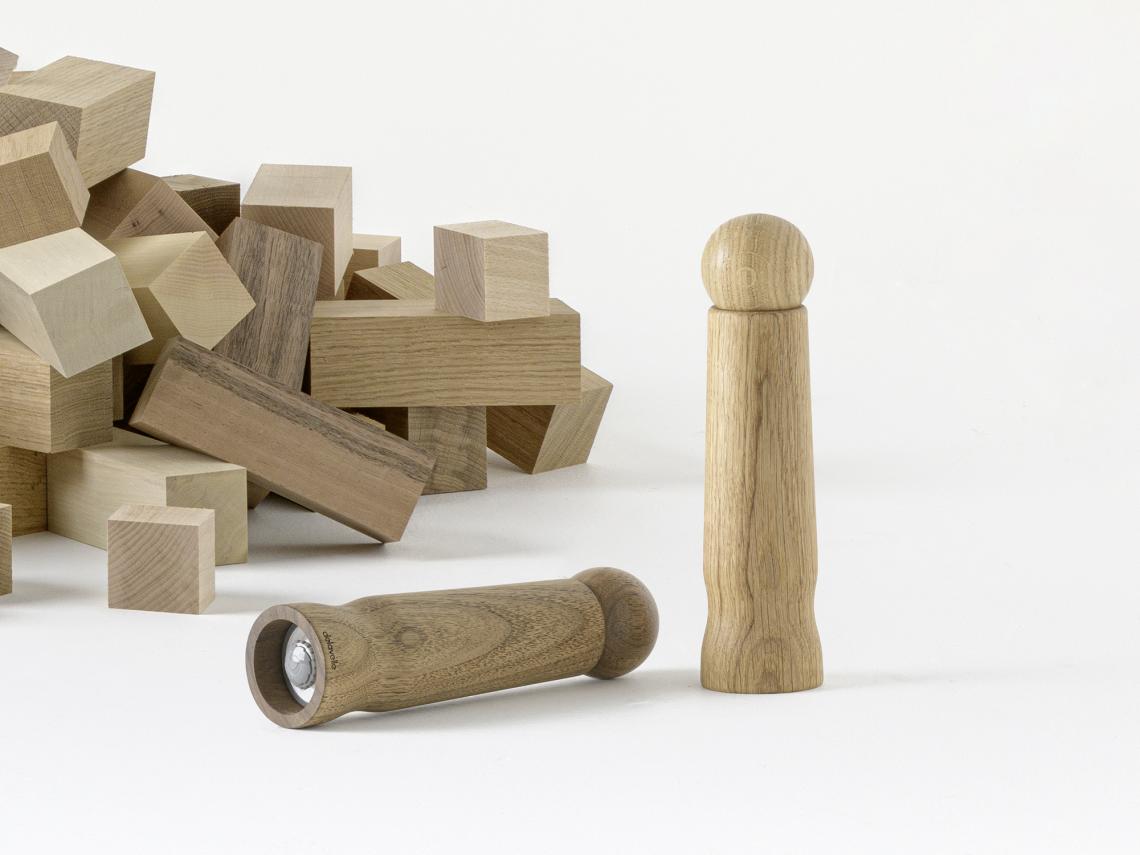
We have also created accessories such as salad servers and the Garenne pepper & salt mill specifically to valorize the sections of wood offcuts commonly collected at the workshop. With prices around €2500/m² for some solid woods, which equates to €5000/m² considering only 50% yield in furniture production, these small pieces of oak or walnut are too precious to be considered waste and are therefore revalued at their true worth by being used in eco-responsible, French-made design accessories for the kitchen.
When reuse is no longer possible or economically viable, our smallest pieces of wood are then utilized as heating fuel since our investment in a new biomass boiler in 2021.
After passing through a shredder, they will join the wood chips and dust collected throughout the year and provide heat for the entire workshop. In this way, we ensure that 100% of the waste produced by our wood workshop is recycled.


Atelier Hugo Delavelle
ZA des Champs Piot
Route de Ronchamp
70400 Saulnot
0033 (0)3 84 36 08 16
contact@delavelle-design.fr